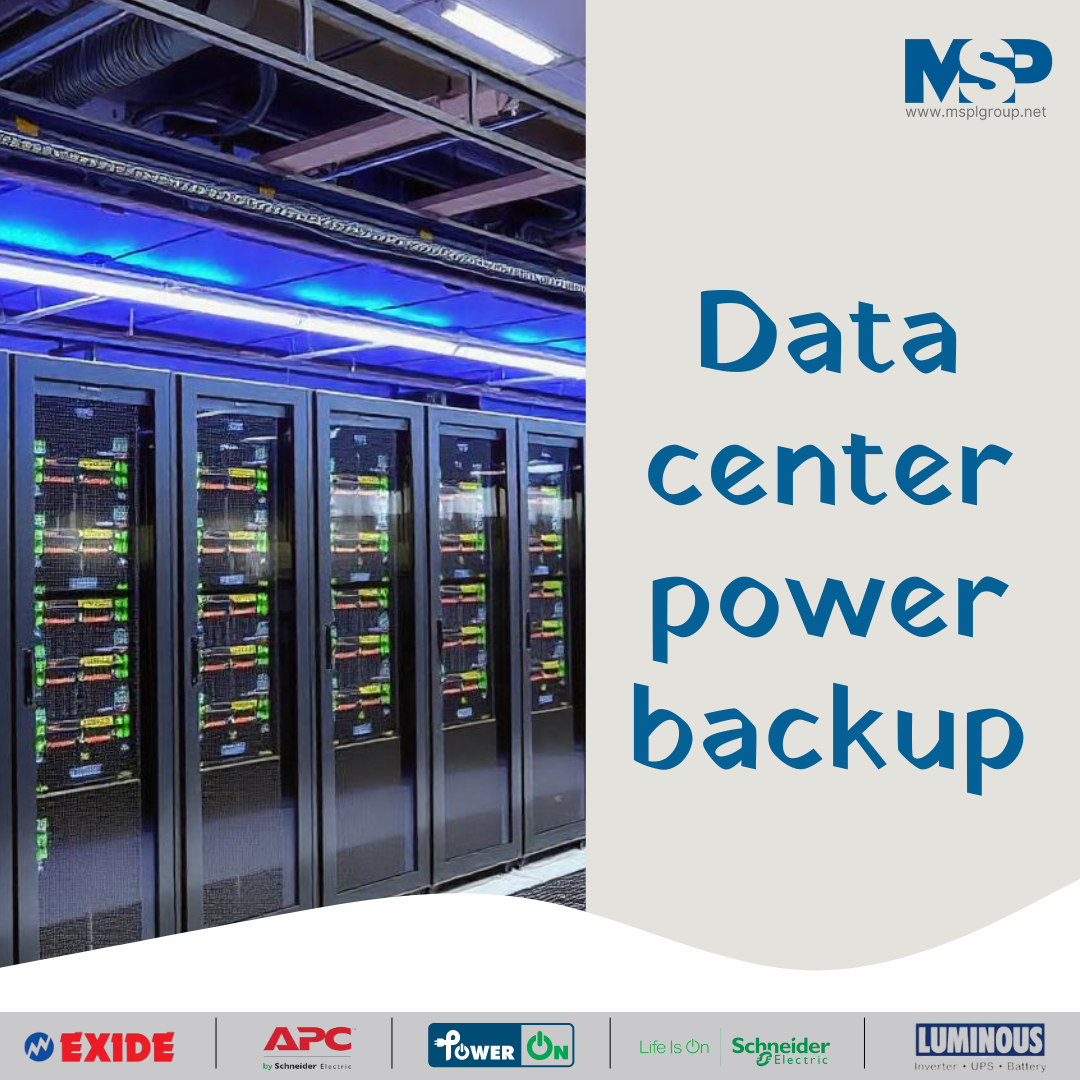
DATA CENTER POWER BACKUP
Data centers require power backup systems due to the fact that power provision affects continuous service, successful data protection, and network infrastructure integrity protection. Data center loss of power for short durations impacts data loss and hardware failure and, therefore, should not happen; such protective equipment, including Uninterruptible Power Supplies and generators, along with battery storage, is essential.
A UPS offers to supply power instantaneously when the main power supply is interrupted, thereby providing a bridge until the backup generator or generators start. It protects sensitive equipment like servers, storage systems, and networking devices against instantaneous spikes in power and outages. UPS systems also facilitate shutdown procedures to safely terminate operations, reducing the chance of data corruption or loss.
With the uptake in cloud services and digital infrastructure, data center power backup systems are fast becoming advanced, using energy-efficient and renewable sources of power to meet the modern energy standards of requirements while ensuring 24/7 operations and data security even in the event of extended outages.
Here are key points for data center power backup:
Continuous Operation: Power backup systems will keep running the servers and networking equipment for a longer time in the event of a power failure, thus resulting in minimal downtime.
Instant Powers from UPS: UPS ensures the generation of instant backup from the power source, which acts as a bridge waiting in anticipation for the generators to activate.
Protection from Power Fluctuations: UPS units protect data center equipment from power surges and voltage drops plus fluctuations, which can damage or even corrupt data.
Backup Generators: Diesel or natural gas-powered generators supply power for an extended period in case of protracted outages and support constant operations of the data center.
Redundant Power Systems: Data centers use multiple backup levels, typically consisting of three layers (UPS, generators, and battery banks), that ensure data center reliability if one component fails.
Safe Shutdown Processes: Power supplied by backup systems allows servers and critical systems to shut down in an orderly fashion to avoid losses from data corruption.
Scalability: Power backup solutions can be scaled to match data center size and capacity so all the equipment is protected, from small server rooms to large data centers.
Energy Efficiency and Sustainability: Modern data centers integrate renewable energy sources and energy-efficient technologies to meet environmental standards while ensuring reliable backup power.
Critical for Data Protection: Backup power prevents data loss. It ensures business continuity and protects sensitive information during an outage.