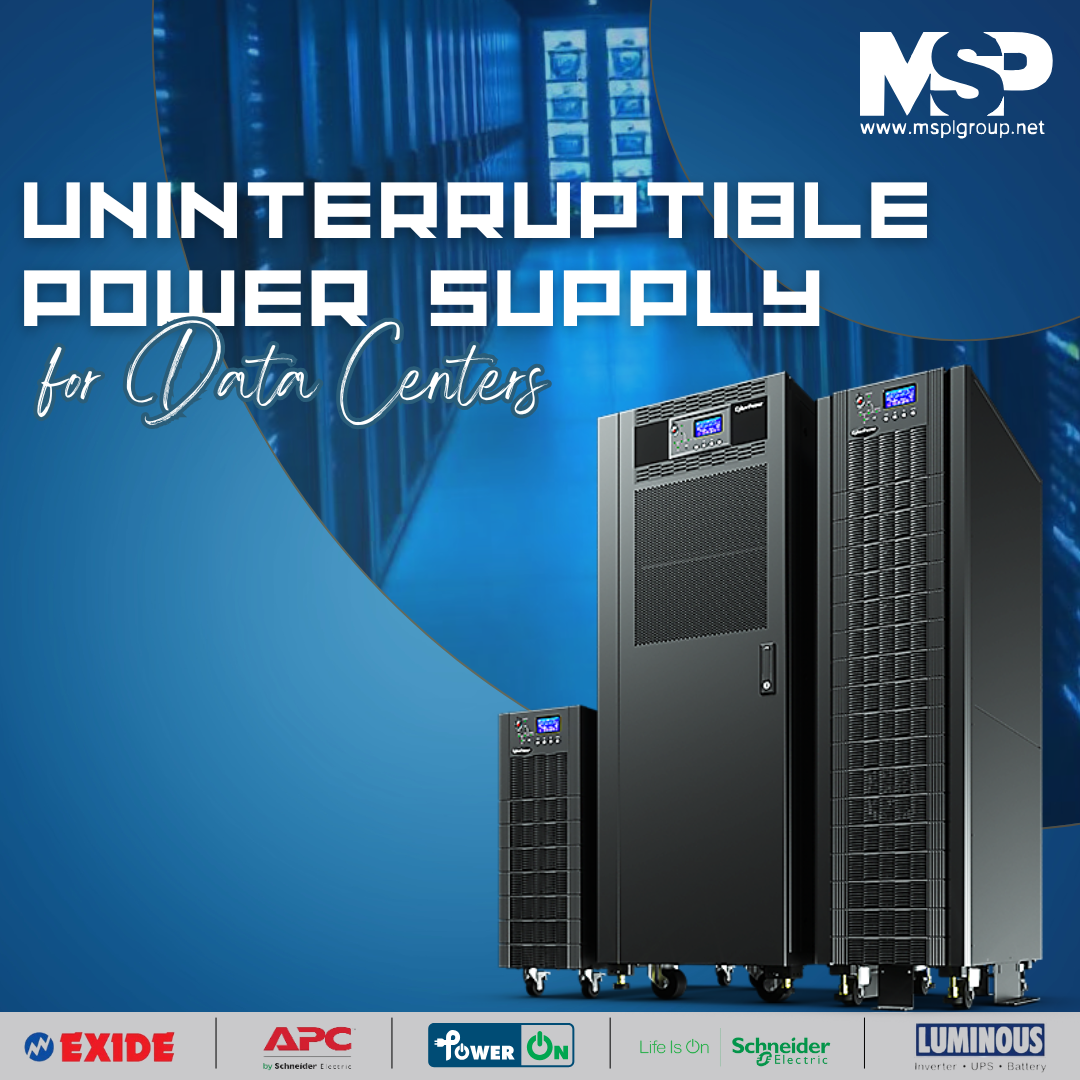
Uninterruptible Power Supply in data centers
is an indispensable component that delivers backup power in case of an electrical outage. This helps prevent data loss and downtime. A data center always needs a stable power supply to the servers, storage systems, and network infrastructure. Any sort of interruption for even a little while can bring about massive disarray, even causing harm to business operations and client trust.
A UPS is fitted with batteries that automatically start in case of a power failure, enabling systems to continue running long enough for administrators to take corrective actions, such as safely shutting down equipment or switching to backup generators. UPS systems also protect against power surges, voltage drops, and fluctuations, maintaining a stable power environment. Data center UPS systems are designed to meet specific needs with varying sizes and capacities, ensuring high availability, reliability, and the protection of sensitive data. Investing in a quality UPS is essential for maintaining data integrity and business continuity.
Some of the key points about Uninterruptible Power Supply in data centers include:
Continuous Power Supply: The UPS ensures uninterrupted power supply to critical equipment in case of a power outage or fluctuation.
Backup Time: The UPS ensures that there is enough backup time (minutes to hours) for safe system shutdown or transition to backup generators.
Power Quality Protection: The UPS protects against power surges, voltage drops, and fluctuations that may damage sensitive equipment.
Scalability: Available in various sizes and capacities, allowing customization to meet the specific power needs of a data center.
Battery Types: Utilizes lead-acid or lithium-ion batteries, depending on the UPS system’s design and power requirements.
Redundancy: Often configured in redundant setups (N+1, 2N, etc.) to ensure reliability in case of UPS component failure.
Remote Monitoring: Modern UPS systems feature remote monitoring and management capabilities to alert staff of issues and optimize performance.
Energy Efficiency: High-efficiency UPS models minimize the waste of energy, reducing costs in operations.
Business Continuity: Critical for uptime protection; protects both infrastructure and sensitive data.
Cost: High initial costs but very necessary for long-term reliability and avoiding costly downtime.
Call us on 08048128715 for the best UPS rental service.